33.4242° N, 111.9281° W
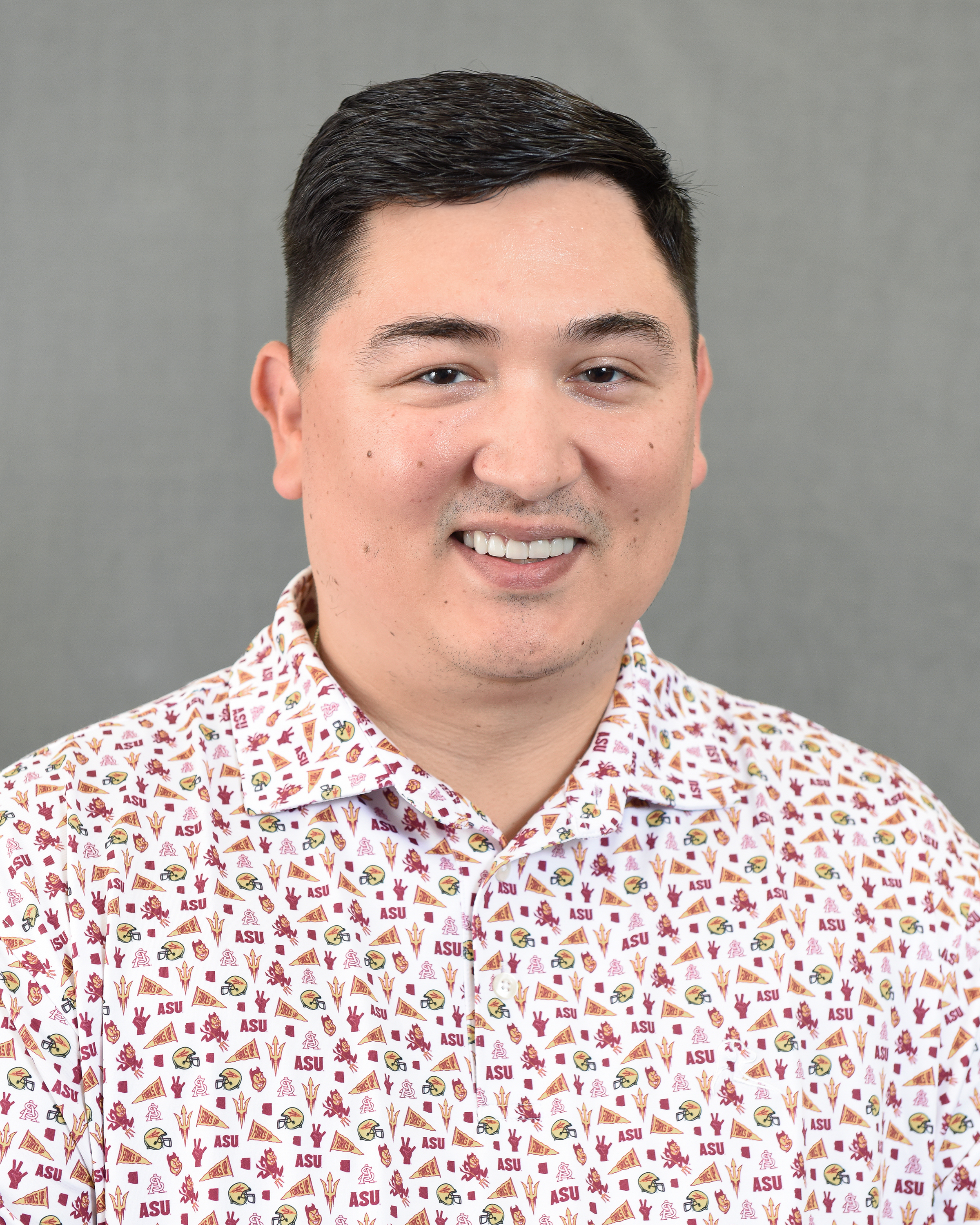
Aaron Flores
Assistant Professor
School of Geographical Sciences & Urban Planning, Arizona State University
I am a human-environmental geographer with research interests centered around the social aspects of hazards and disasters. My work focuses on distributional environmental justice, determining whether socially disadvantaged groups face disproportionate exposure to hazards such as flooding, extreme heat, and pollution. I also examine how environmental exposures relate to health outcomes, and how individuals and communities perceive risks from these hazards. I use quantitative methods, large datasets, and geospatial techniques in GIS to analyze patterns of environmental injustice.
I earned my B.A. and M.S. in Geography from Texas Tech University and completed my PhD at the University of Utah. My research has been funded by the National Science Foundation and the Ford Foundation. I teach courses in GIS, environmental justice, and statistics, and I am deeply committed to mentoring students. Outside of academia, you can usually find me hanging out with my dogs by the pool, watching sports, or grilling.


Flood Risk Inequities
Federally-Overlooked 100-Year Flood Zones in the U.S.
My main current research area focuses on federally-overlooked 100-year flood risk inequities in the Conterminous United States. These are flood zones that are not identified in federal flood risk assessments. This work utilizes dasymetric mapping, flood risk data from Fathom and the Federal Emergency Management Agency (FEMA), as well as sociodemographic data from the American Community Survey.
Building Quality in Overlooked Zones
Former ASU PhD student Yilei Yu (now a postdoc at Rice University) led a study showing that buildings in federally-overlooked flood zones are of lower quality and condition than buildings in FEMA flood zones in Greater Houston.
FEMA Underprediction in Utah
University of Utah PhD student Austin Clark led a study showing that FEMA may underpredict flood risks to residential properties in Utah by 13×.
Health Impacts of Flooding
Mortality and Large Floods
During my PhD at the University of Utah, I conducted extensive work on the physical and mental health impacts of Hurricane Harvey, highlighting disproportionate impacts on racial/ethnic minorities and those of low socioeconomic status in Greater Houston.
More recent work in collaboration with researchers at Columbia University, Harvard, and the University of Arizona analyzes 35.6 million death records spanning the past two decades. The study reveals that large floods were linked to up to a
including cardiovascular disease, infectious diseases, and injuries, even in non-hurricane-related floods caused by heavy rain, snowmelt, or ice jams. I have also conducted a review paper examining differential impacts in physical and mental health outcomes while assessing methodological considerations across the literature on flooding and health in the U.S.
Extreme Heat
Neighborhood-Level Heat Inequities
I have examined inequitable exposure to extreme heat at the neighborhood level using Landsat satellite imagery and air temperature data in places such as Phoenix, AZ, Lubbock, TX, and the Northeastern United States. This research has consistently observed that neighborhoods with higher percentages of racial/ethnic minorities and those of low socioeconomic status experience disproportionate exposure to elevated temperatures. I am also increasingly interested in other metrics and devices to examine heat, such as mean radiant temperature and sensor technologies.
Air Quality Monitoring
PurpleAir Sensor Inequities
I have collaborated on projects focused on social inequalities in the distribution of PurpleAir sensors (a non-governmental air quality monitoring network) in Los Angeles County, California, and Phoenix, Arizona. This work indicates that neighborhoods with higher percentages of Hispanic/Latinx, Black, and low-income residents have reduced access to information about local air pollution. The near real-time, high spatial resolution pollution estimates provided by PurpleAir can help the public stay informed about their local air quality, which may help them make routine and/or protective decisions to lessen their exposures. While people seek to use citizen science to equalize environmental knowledge, the self-organizing nature of non-governmental air quality monitoring networks can be exclusionary and may reproduce patterns of environmental injustice.
Community-Engaged Research
St. Mary's Food Bank + ASU
In 2024, my colleagues and I started a partnership with St. Mary's Food Bank, where we co-developed an interactive GIS dashboard to support data-driven strategies for addressing food insecurity across Arizona. As part of this collaboration, I co-mentor undergraduate and graduate students alongside Connor Sheehan (School of Social and Family Dynamics) and Christina Ngo (Office of University Affairs). Together, we train students in spatial and statistical analysis, research design, and manuscript preparation.
We work closely with food bank leadership to co-produce research questions, brainstorm project ideas, and create data visualizations. This collaboration also led to the creation of the Data Devils program, which I co-founded with Sheehan and Ngo. Data Devils provides graduate students with hands-on training in data analytics and community-engaged research.